::
Bjorn, thanks for burning some powder for the cause.
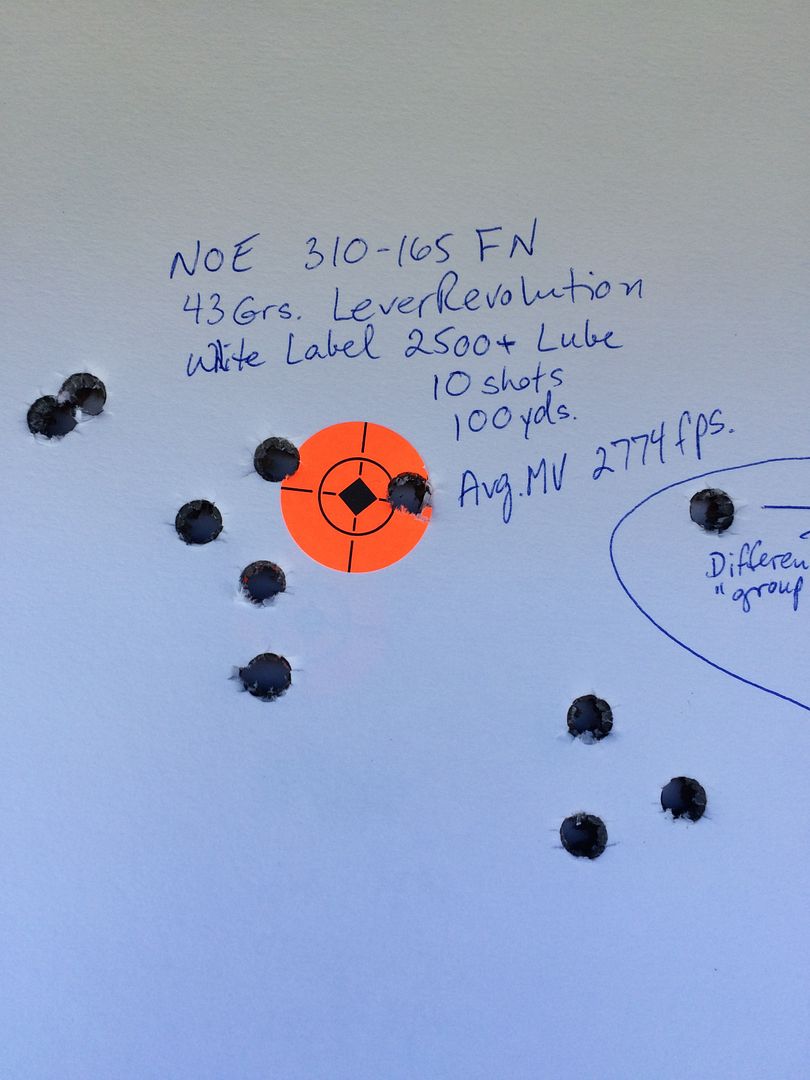
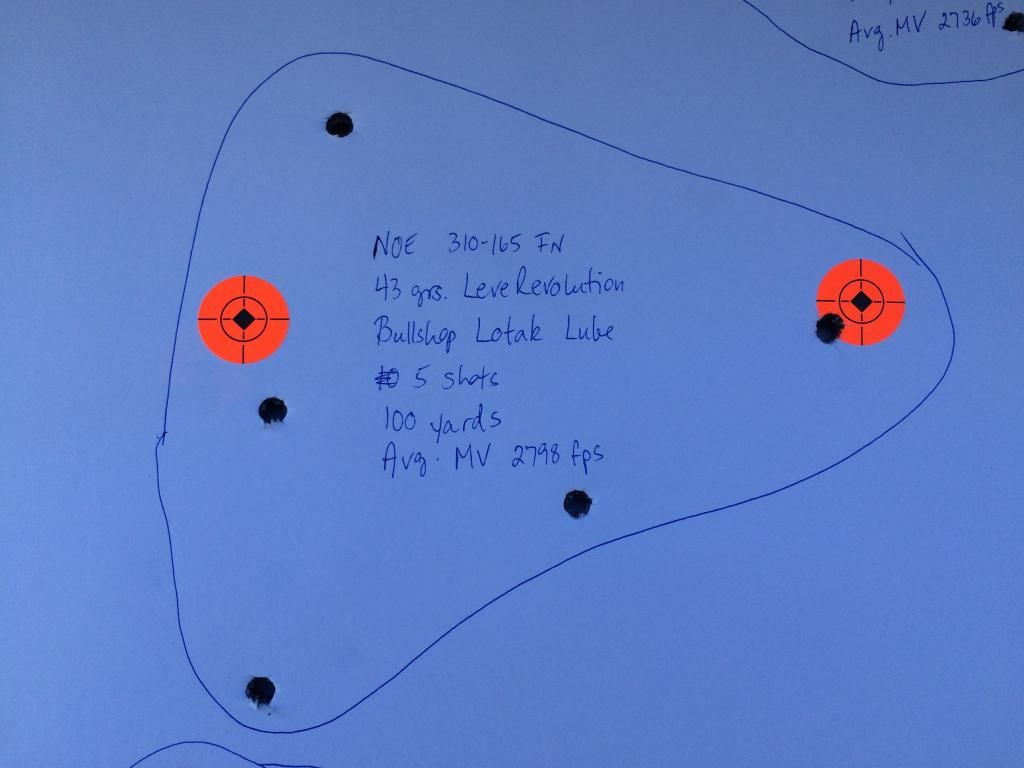
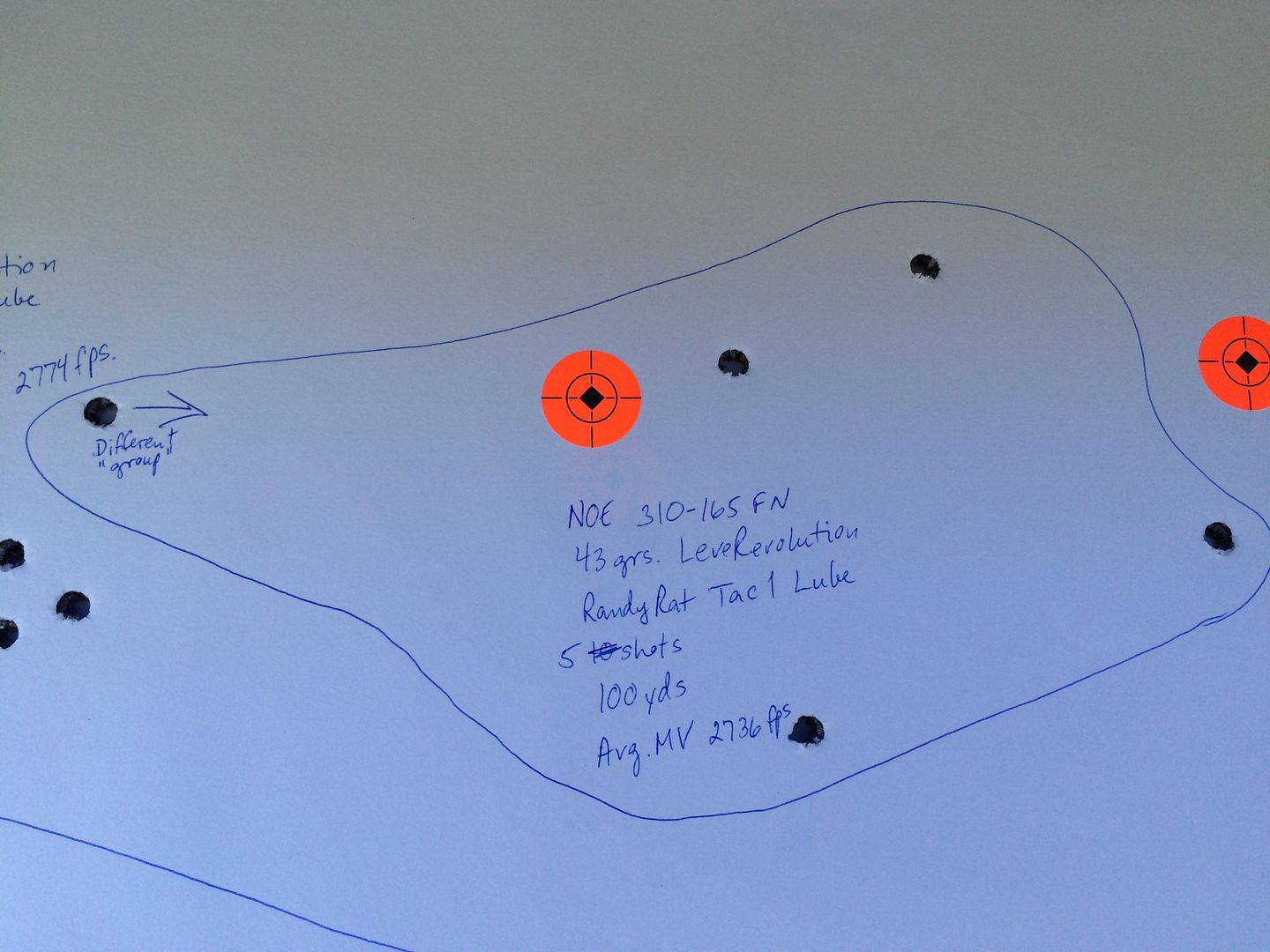
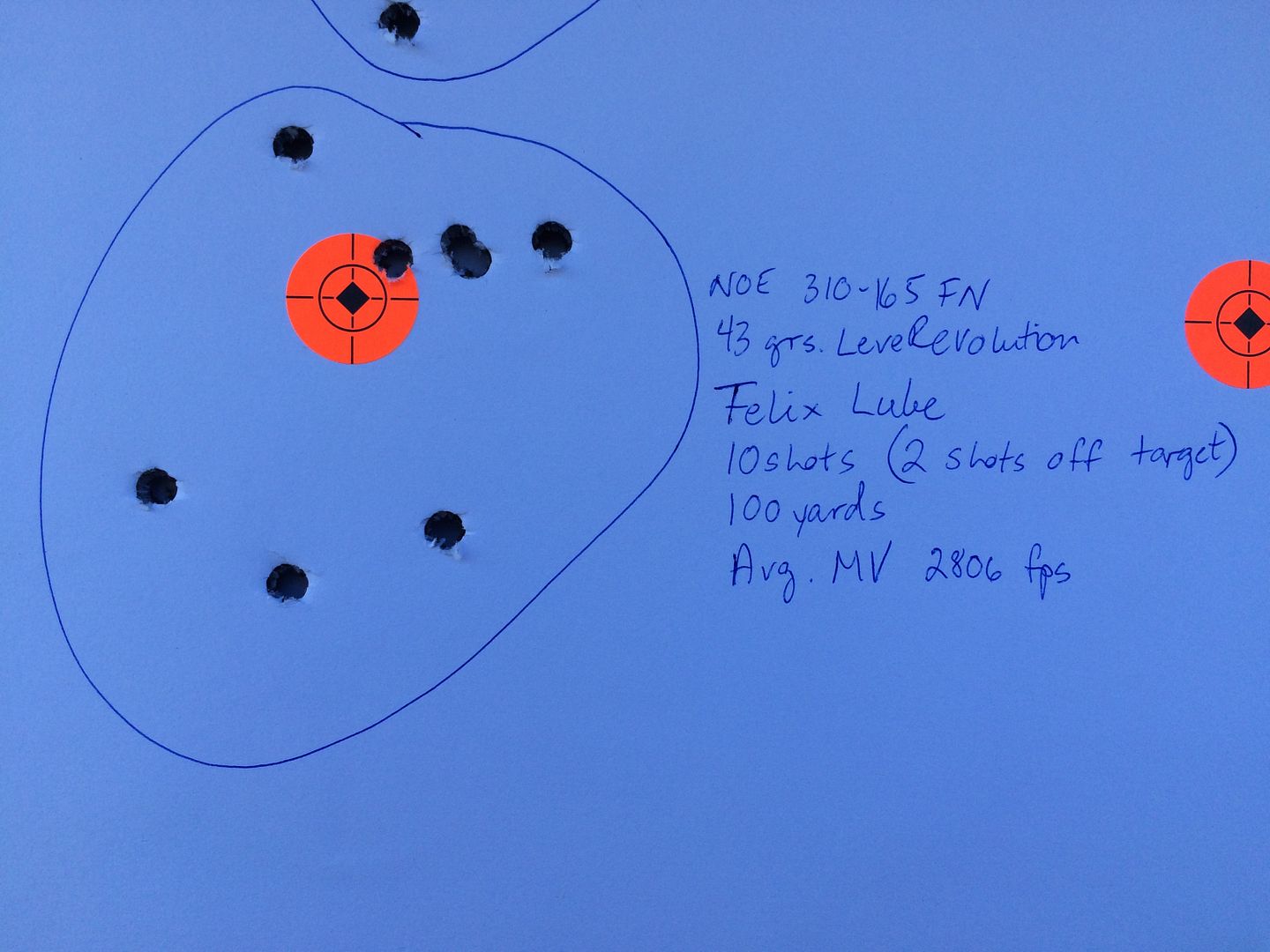
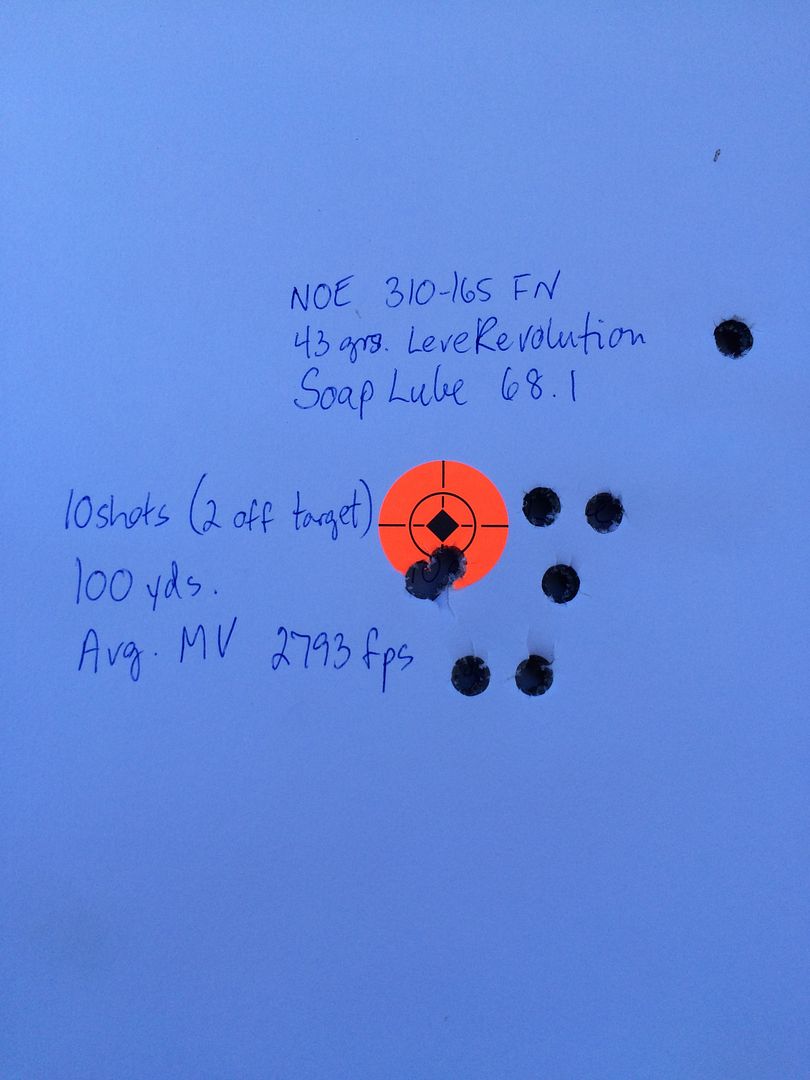
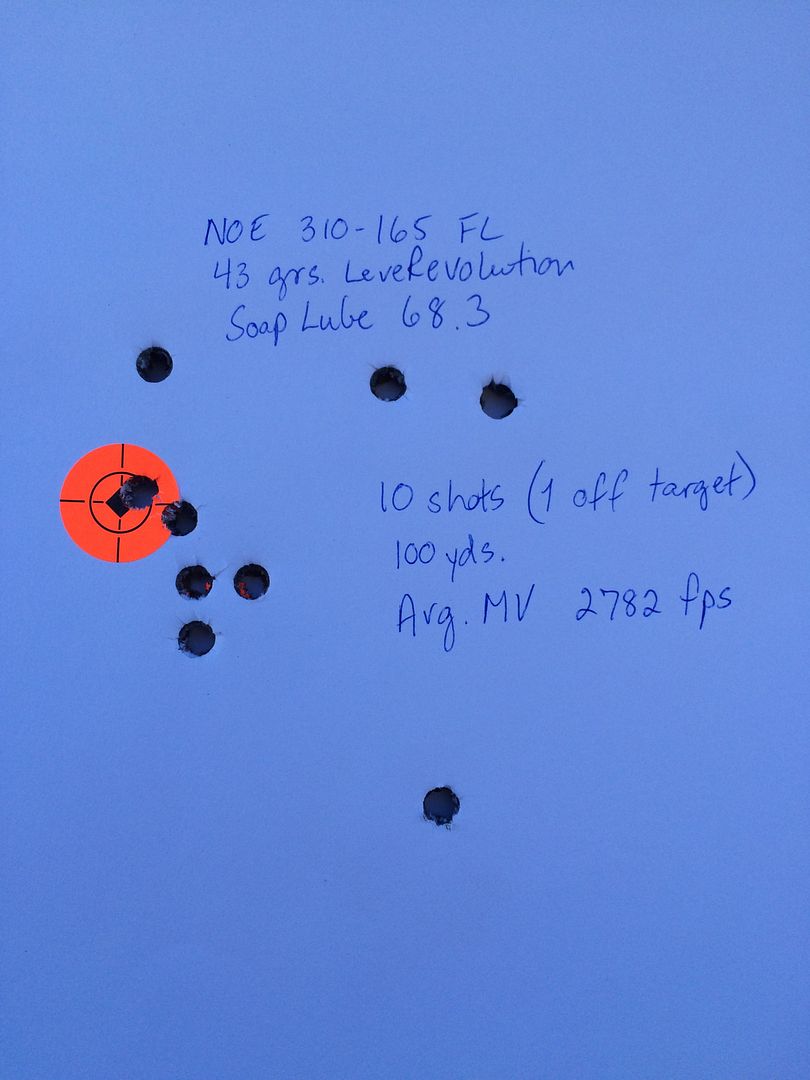
Couple things to mention about lube testing. First, yes, at HV lube does matter, I think you just proved that for yourself, something we all have to do to find what really matters and what doesn’t in our own applications. HV performance is one of many reasons why some of us have been spending so much money, time, reloading components, and energy on the quest for a better mousetrap. Also, if you don’t have a “known good” accuracy load to begin with, it’s of course tougher to tell what the lube is doing. Might back off a grain or two and try the more promising lubes again.
Another thing to keep in mind is bore condition. You did well to clean between lubes with Ed’s and burn a couple before shooting for a group, but Felix lube in particular may need more than ten rounds to “settle in”. Bore finish has a lot to do with this, and I realize you’re using a quality, aftermarket barrel, but still there is the seasoning effect to consider. Several of us lube cranks got together a few years ago and decided on a standard for lube testing based on a lot of common experience and observations: Clean bore (clean w/Ed’s and patch dry is good), then shoot one group of ten at a reasonably brisk pace. Let the barrel cool to ambient temperature, fire another ten-shot string and go home. Wait at least a day without touching the bore and do it again. That will give a good idea of what the lube is doing through long strings of fire and cold-starts. With a known-good load and clean barrel start, a different lube will either start to come together, stay the same, or fall apart. By 40 rounds, you will know for sure what’s going on. Observing what order the flyers appear in, if any, can help determine if lube is the cause, or not, for example if shot four, five, or six out of a cold-barrel start is out of the group, it may be that the lube is “purging”. Noting the position and pattern to these cyclic flyers also helps, generally they will print in a consistent location out of the group. Sometimes the flyers are due to other things, and are completely random, but this should be eliminated from the test load before drawing any conclusions from the testing of various lubes. If a lube holds up to those first 40 rounds shot as described, do that same 40-round routine again on the hottest and coldest days you plan to be shooting.
A note on the soap lubes: The SL-68.1 has no Vaseline in it, only heavy mineral oil. I’ve shot it a bunch and so have a couple of others. We’re seeing an occasional flyer here and there, and the though is it has too much oil and not enough middle-viscosity modifier, leading to occasional lube purge. The SL-68.3 is the same as 68.1 but has an additional quantity of Maxima K2 polyolester two-cycle premix oil in it equal to the castor content. I made it specifically for a cold-weather tester and sent him some along with other samples in case they were a dismal failure in sub-zero weather, but so far the ester has proven to be a handicap rather than any help at all, and isn’t needed. Your multiple purge flyers tend to agree with the rest of us, it’s just too slippery. What I didn’t send, and am regretting now, is the last scrap of SL-68 that I had laying on my lubing bench. I’ve been shooting it since early this year and have several hundred rounds downrange with it in three rifles, all over 2300 fps, some bumping 2600. Aside from a slight tendency to antimony wash with softer, low-tin alloys, it has performed very, very well for me at temps up to 105F, and was recently tested to minus 7 with flying colors by Eutectic from the CB forum. The other variations of SL-68 were simply part of the “grand experiment”, and have proven more about what NOT to do to a lube than anything else, we just don’t know for sure what effect a little more or less of an ingredient will have until we put rounds down range.
One advantage of the soft, “dry” soap lubes is that they are pretty much indifferent to lube groove capacity, shape, how many are filled, or the velocity, be it a deep-groove Keith SWC in a .38 SPL or multiple grooves of a .30-caliber Loverin bullet. This is an important factor to consider with a “universal” lube formula, as with some it matters a whole lot how much lube is applied to the bullet.
A lot of the lube testing that I’ve been involved with, particularly with the soap-based lubes, has happened off-screen, and results are often discussed conversationally on the forums rather than in a formal, scientific format. Any results discussed were never intended to “prove” anything to skeptics, so if the findings declared in conversation aren’t adequate proof for some, all I can say is I wasn’t testing for them, only for myself and those to whom it DOES matter and who have the means to verify or contradict my own findings, and you can take the discussions at face value, or test them yourself in a formal fashion as Bjorn is doing and share your findings if you like. The more honest info that’s shared, formal or not, the more data points we have to point out the good and bad of these experimental formulas, and also the commercial ones.
One last note about lube, the “men and boys” really get separated above 2400 fps, and what you thought you knew about lubes can all be thrown out the window at HV, and many people’s “pet lubes” choke badly when their tails are twisted hard or are put through the “standard test” wringer outlined above.
Please keep up the good work, Bjorn, and if you aren’t happy with the way the 2700+ works out after you test it, I’ll put together another batch of SL-68 and send you some, I think you’ll like it, especially since it won’t melt on you in the Florida heat like most anything else available will.
Gear

bjornborud
 bjornborud
 daveridenour
 tommeboy
 Larry Gibson
 darrinwright
 ianharris
 SwedeNelson
 timmalcolm
 sgt.mike
