Shooting the 310-165-FN (XCB), some observations

Home › Forums › NOE Forums › NOE Archive › Historical Archive › Using NOE Moulds › At the Range › Shooting the 310-165-FN (XCB), some observations

  • This topic is empty.
  • Creator
    Topic
  • #487751
    bjornborud
    Participant
      Up
      0
      Down
      ::

      I shot 160 rounds loaded with the XCB bullet today, giving my XCB rifle a good workout. What I was doing was in no way a TEST, in fact I won’t be using that word much anymore, since a test implies laying down baselines, using a comparison protocol, a minimum amount of shots, etc. etc.

      Rather than getting all complicated I’ll be doing some shooting, explaining and observing over the next few months, and I invite you shooters out there to share your comments and critiques here on the board. No “rights” or “wrongs”, I’ll be trying out a multitude of variables in my quest to make my rifle shoot as well as she is capable of.

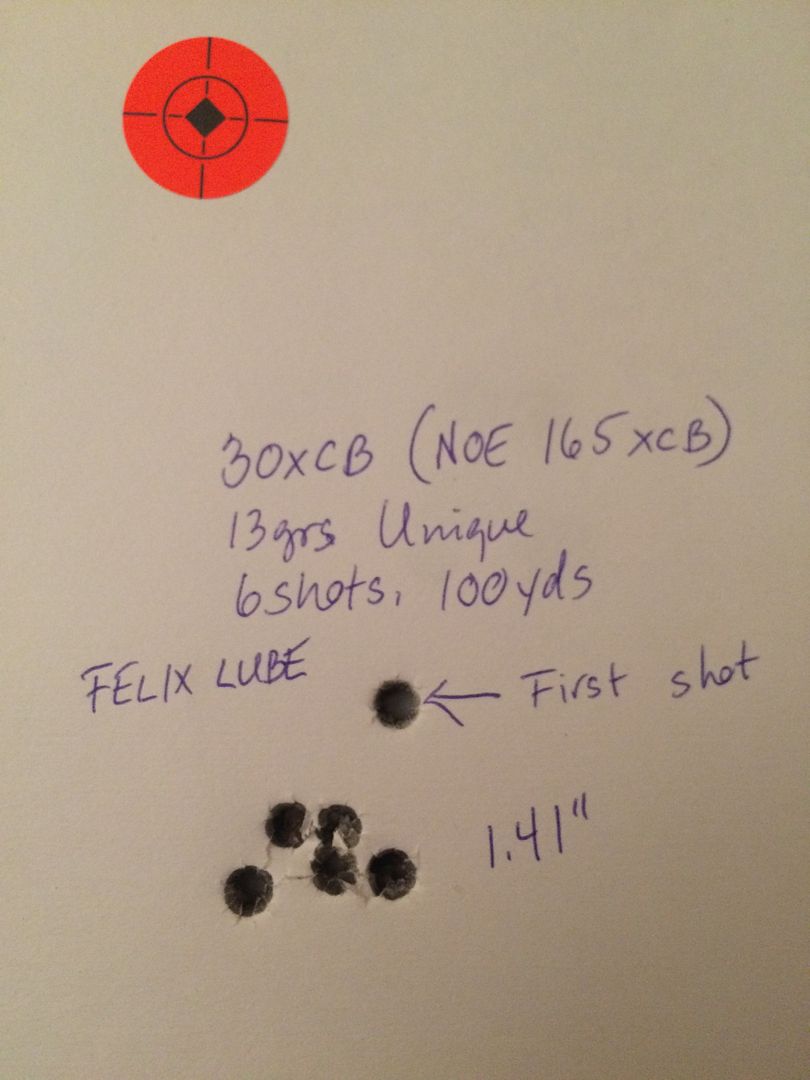
      When I did my “HV lube test” the other day, Geargnasher commented that I hadn’t shot sufficiently large strings for the bore to get conditioned with the lube. I have to admit that he most likely is right, and today I wanted to give this famous lube a fair shake. At the end of the day a hundred rounds lubed with FWFL had gone down the bore, and here are some of the highlights:
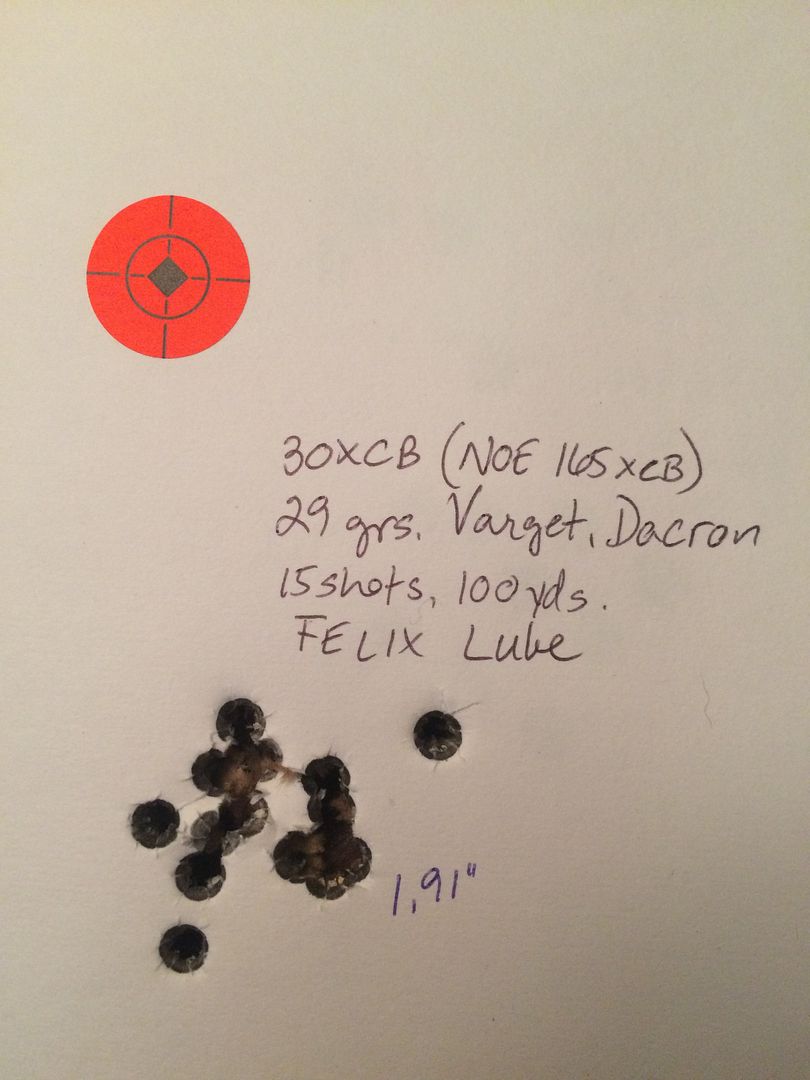
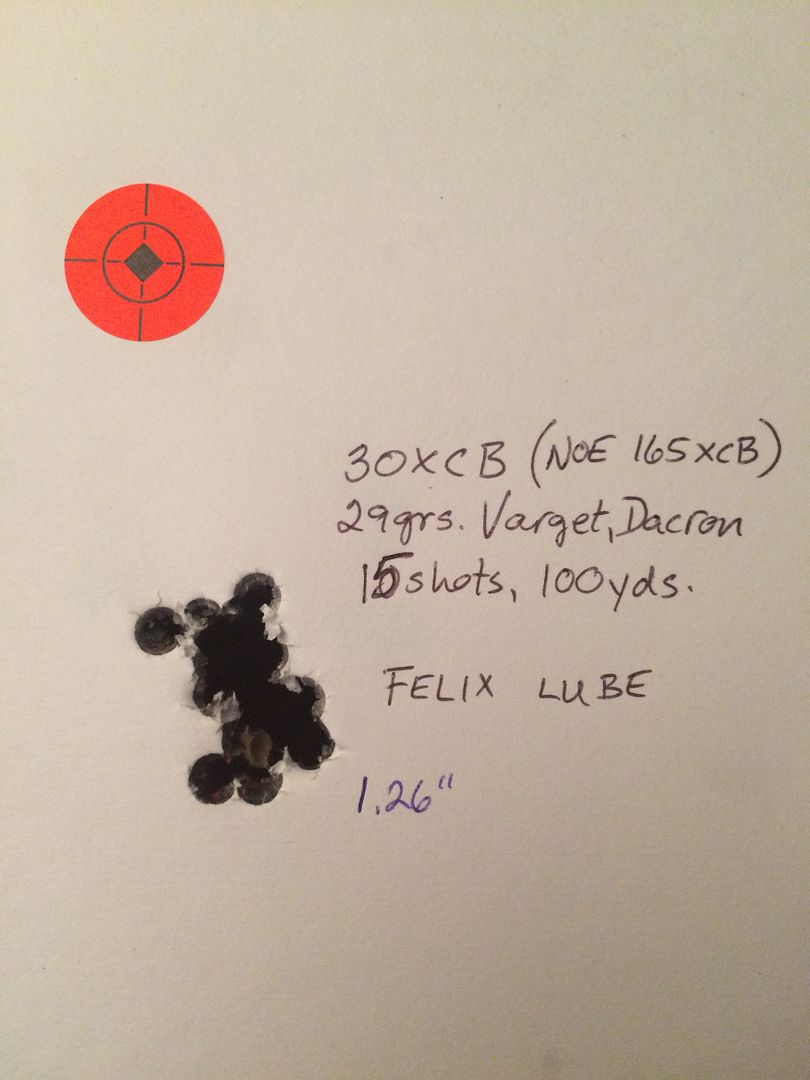
      First I shot a few mild loads – 13 grains of Unique. After the first group of 6 I went directly into 3 strings loaded with 28 grains of Varget. The first 2 groups, 15 shots each, were filled with 3/4 gr. Dacron, with the third group (10 shots) I used Puff-Lon as a filler. This is a powdery substance that is compressed (by 20%) between powder and bullet base. I could not detect much difference in accuracy between the two methods.

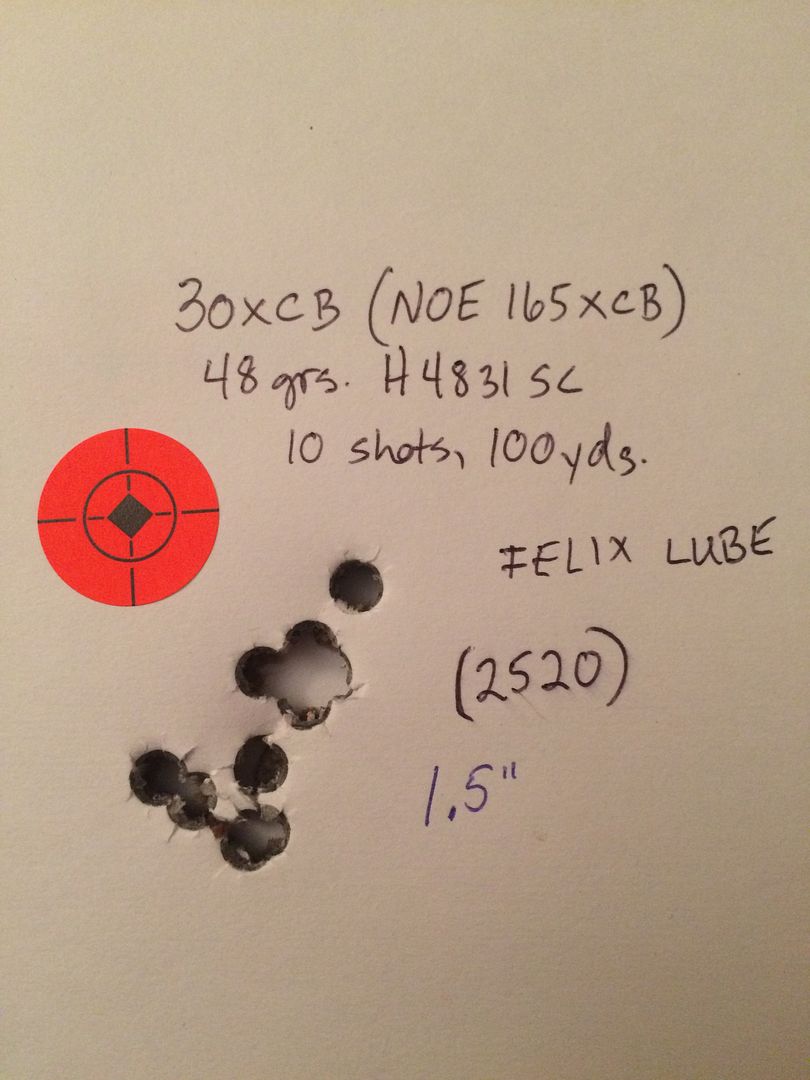
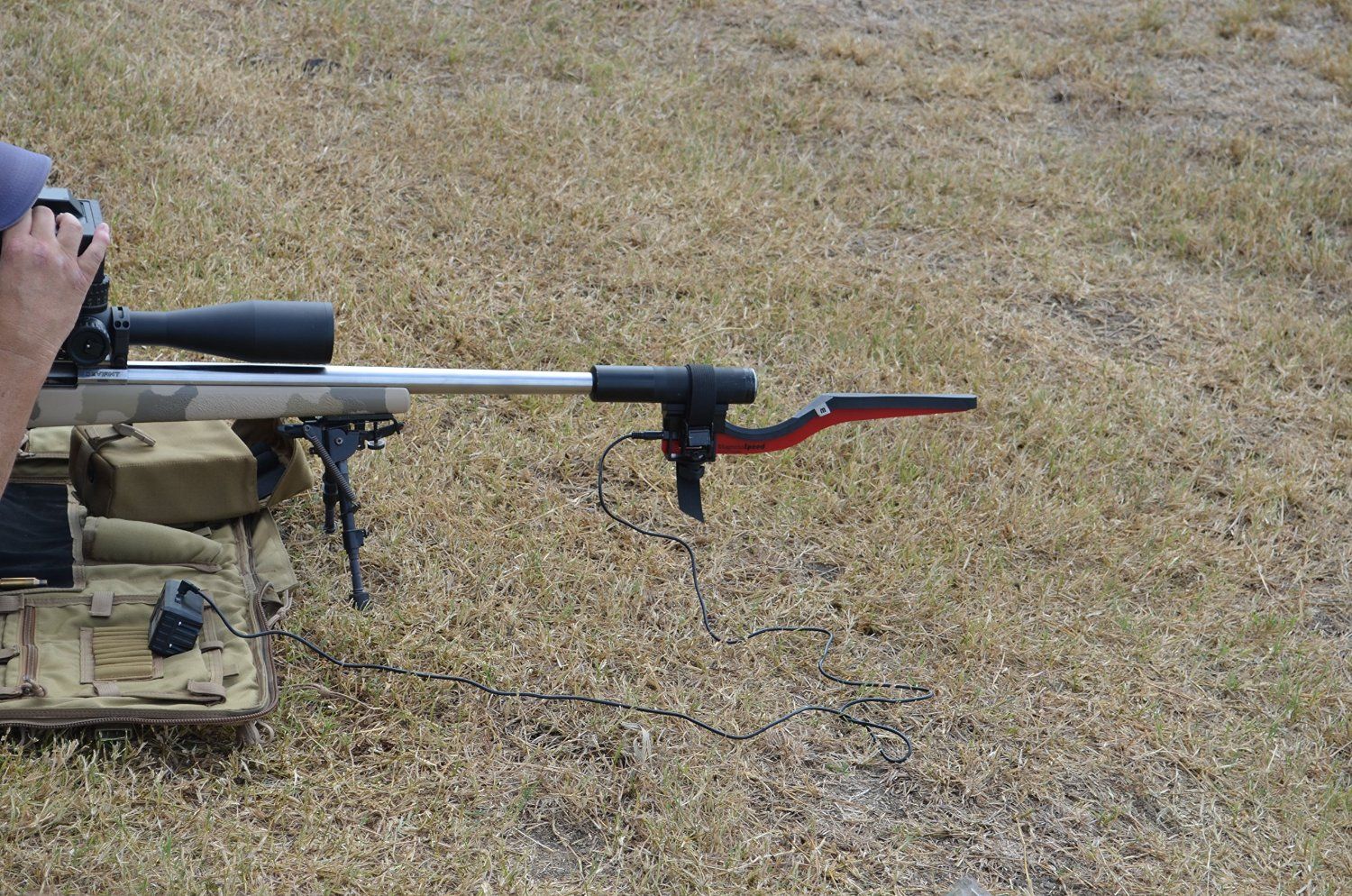
      Then I went straight into some High Velocity stuff. The lube held up very well as the target pictures show. I didn’t set up my chronograph; I have ordered this contraption and it’s being delivered Wednesday:
      A1AcM0TshpL_SL1500__zps3ede08f7.jpg

      It should make documentation much easier, since I like to gather data from all my shooting.
      The numbers in parenthesis next to the HV groups are MVs chronographed with the identical loads earlier, when the rifle’s barrel was 3 1/2″ shorter. It should give a good reference.

      Here are the targets from several of the strings shot with Felix lube:
      IMG_2794_zps4605fda9.jpg
      IMG_2790_zps8358de9e.jpg
      IMG_2791_zpsfb743a50.jpg
      IMG_2792_zps57537446.jpg
      IMG_2793_zps39c76652.jpg
      IMG_2795_zpse9e205af.jpg

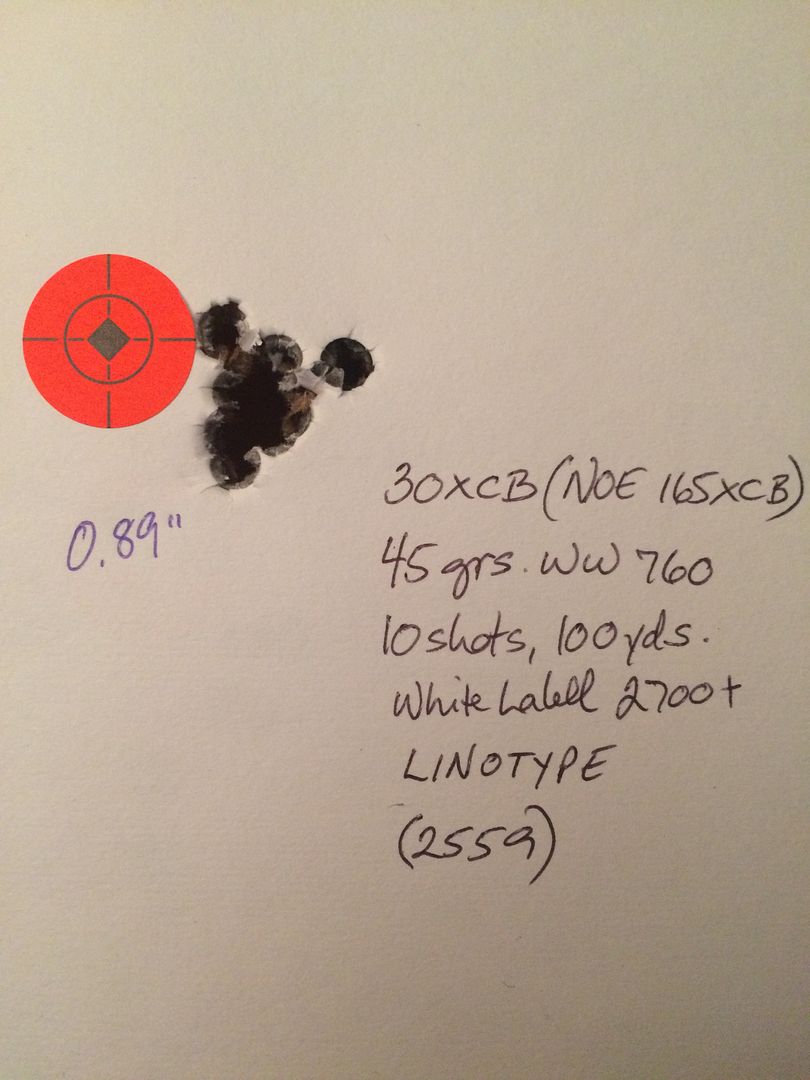
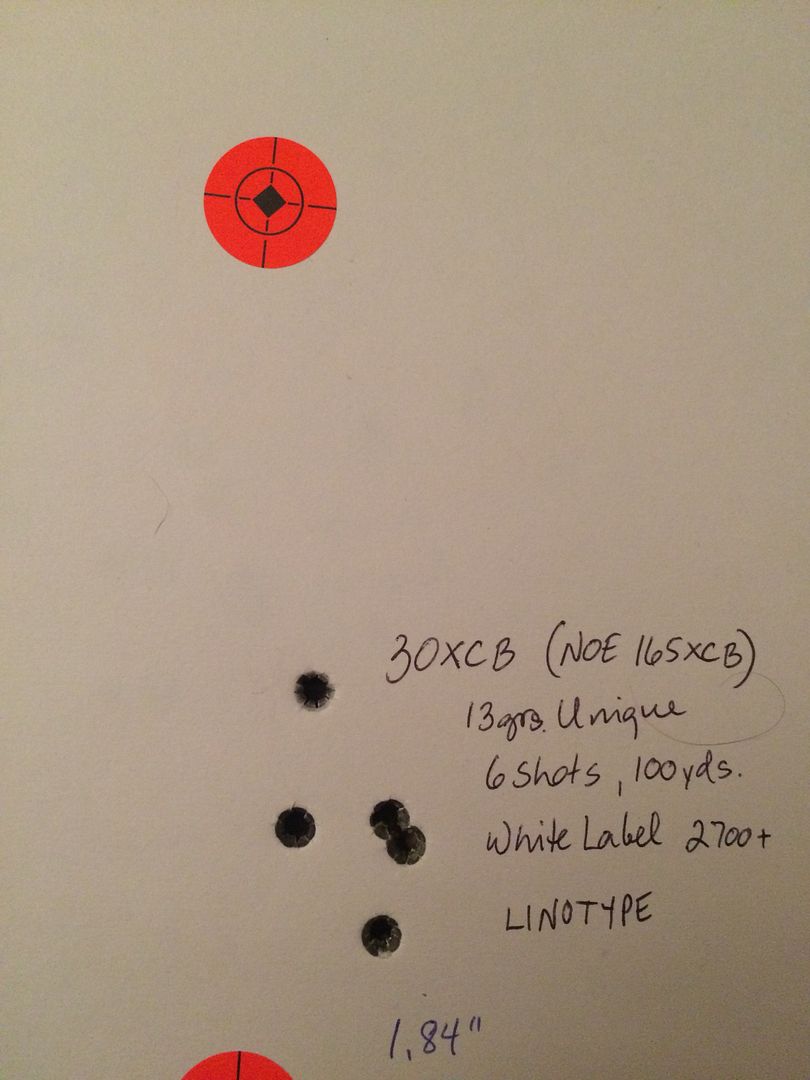
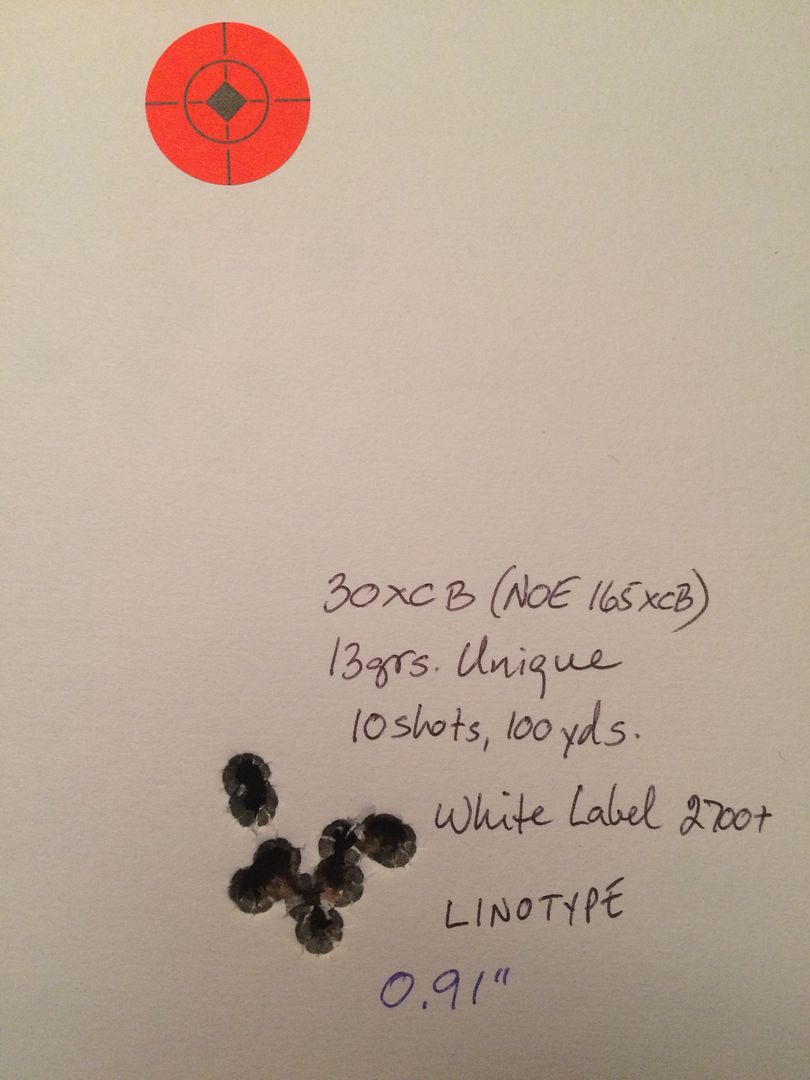
      At this point I scrubbed the bore thoroughly, and changed over to a lube I hadn’t tried before: White Label 2700+, from Lars’ Lubes. I had loaded several strings from mild to wild, and to say that I was impressed with this lube would be an understatement. In earlier conversations with Larry Gibson it was mentioned that this lube could be too stiff and possibly leave lube in the grooves upon muzzle exit. Because of the XCB bullet’s shallow grooves I decided to give it a go and it appears the lube performs as advertised.

      With this lube I also mixed it up and loaded several bullets cast from pure linotype. Those are indicated in the target photos.
      IMG_2796_zpseddf171b.jpg
      IMG_2788_zpsaf4d31b6.jpg
      IMG_2789_zpsf6684294.jpg

      All in all I was very pleased with the way both rifle and loads performed. Not pictured are several groups shot with experimental powders, that didn’t work out well. These loads bombed with both lubes, so no fault there. Hodgdon Superformance just doesn’t shoot well at the velocities we were trying to attain, and more experimenting is needed in this area.

    Viewing 15 replies - 46 through 60 (of 140 total)
    • Author
      Replies
    • #494623
      tommeboy
      Participant
        Up
        0
        Down
        ::

        The checks need a more square edge. If the edge is equal all the way around it will leave the barrel equal. Look at some actual BR bullets that are not mass produced and you will see nice even flat edges

        #494624
        timmalcolm
          Up
          0
          Down
          ::

          The checks need a more square edge. If the edge is equal all the way around it will leave the barrel equal. Look at some actual BR bullets that are not mass produced and you will see nice even flat edges

          I have, and that is what’s on my mind when I look at the checks we use. If jacketed bullets had bases as uneven as ours are, how accurate could you be? Hmmmm.

          #494625
          ianharris
            Up
            0
            Down
            ::

            The checks need a more square edge. If the edge is equal all the way around it will leave the barrel equal. Look at some actual BR bullets that are not mass produced and you will see nice even flat edges

            I have, and that is what’s on my mind when I look at the checks we use. If jacketed bullets had bases as uneven as ours are, how accurate could you be? Hmmmm.

            Maybe that’s why so many “match” bullets have boat tails….

            Gear

            #494626
            daveridenour
            Participant
              Up
              0
              Down
              ::

              The checks need a more square edge. If the edge is equal all the way around it will leave the barrel equal. Look at some actual BR bullets that are not mass produced and you will see nice even flat edges

              I have, and that is what’s on my mind when I look at the checks we use. If jacketed bullets had bases as uneven as ours are, how accurate could you be? Hmmmm.

              Maybe that’s why so many “match” bullets have boat tails….

              Gear

              Many “short range” (i.e. 300 yards or shorter) jacketed match bullets have flat bases. The boat tail match bullets with their higher BC’s are typically better for “long range” shooting.

              Dave

              #494627
              timmalcolm
                Up
                0
                Down
                ::

                This has been bugging me. I decided to design a method to uniform the checks before sanding in an attempt to preserve a concentric radius around the edge of the check.
                I selected a piece of 0-1 tool steel from the rack and turned a nose on it that precisely matches the shank of the NOE 30XCB bullet as cast from linotype (since this alloy renders the largest bullet, and thus the largest GC shank). Actually I made it about .0004 larger in diameter to allow for some spring back shrinkage.
                This tool was mounted in one of the tool holders for my milling machine, and the tip was sanded flat to the presision surface it was touching by pulling a piece of 400grit sandpaper between them with the cutting side up. The tool was cleaned, and the checks were pushed onto the nose, and the tool was brought down hard about three times on this piece of precision ground cast iron in order to swage and flatten out the uneven surface of the check.
                On the third bump, I hit the switch that turns on the spindle and held pressure for a second before raising the quill, and turning off the spindle.
                The checks were then wedged off the nose of the tool with a pair of cheap needle nosed pliers I ground and polished for the job.
                IMG_0829_zps099e9c67.jpg
                IMG_0833_zpse62fd856.jpg
                The positive results were easy to see when compared to an unmodified check:
                IMG_0834_zpsb5e6882a.jpg
                The checks were painted with blue dykem and rubbed on the granite surface plate to see how flat they might be. Turns out there is a slight crest to the check which is not surprising considering the method I used to flatten the nose of the tool. I really don’t care as long as it is concentric and flat and it is certainly that.
                IMG_0835_zps467750bd.jpg
                IMG_0836_zps4f25d409.jpg
                Next, I flattened the checks by sanding them using Detox’s method (now I am satisfied that I am actually sanding to a controlled surface) and checked them with the .0001 Interapid. I measured no more than .0005 TIR. One tenth the variance they had as they arrived.
                IMG_08381_zpscb638cd9.jpg
                Finally, I tried them on the Linotype bullets and was pleased to find that I could push them all the way to seated depth with my thumb, and the resistance was superb. Checking the bases for squareness revealed that I attained better accuracy using this method than I ever was able to do with the best seating devices I have created.
                IMG_0832_zps0ff7e8b2.jpg
                IMG_0837_zps85c4b05e.jpg

                #494628
                timmalcolm
                  Up
                  0
                  Down
                  ::

                  I created 50 of these “precision” checks. They will be sent to BjornB for testing at high speed with a known load. They may do better or they may do worse. regardless, we will see if all this headbanging is worth worrying with, or if we should just shoot the GC’s as they come from the manufacturer.

                  #494629
                  daveridenour
                  Participant
                    Up
                    0
                    Down
                    ::

                    Tim,

                    Really nice work! I’m really looking forward to the test results on those too.

                    Dave

                    #494630
                    Larry Gibson
                      Up
                      0
                      Down
                      ::

                      Be very interesting to see how those work and if any measureable improvement in accuracy at high velocity is made.  Along the same lines, if memory serves, there was a recent write up in The Fouling Shot suggesting that having a squared crown isn’t as imperative to accuracy with cast bullets as we want to think it is. If this proves to improve accuracy then we must find a practical way to accomplish flattening/squaring the GCs as everyone doesn’t have a milling machine or the ability to level/square the tools up like Tim does.  Perhaps a die of sorts for use in a reloading press to swage the GCs?

                      Larry Gibson

                      #494631
                      timmalcolm
                        Up
                        0
                        Down
                        ::

                        Be very interesting to see how those work and if any measureable improvement in accuracy at high velocity is made.  Along the same lines, if memory serves, there was a recent write up in The Fouling Shot suggesting that having a squared crown isn’t as imperative to accuracy with cast bullets as we want to think it is. If this proves to improve accuracy then we must find a practical way to accomplish flattening/squaring the GCs as everyone doesn’t have a milling machine or the ability to level/square the tools up like Tim does.  Perhaps a die of sorts for use in a reloading press to swage the GCs?

                        Larry Gibson

                        Actually Larry, I believe that anyone with a decent drill press could do as well. The original checks were so badly warped/potato chipped that nearly anything done on a spinning mandrel would be an improvement.
                        If one were to buy a 5/16″ steel rod from the hardware store, or cut the head and threads off a bolt,
                        chuck it in the drill press, and turn it to the precise diameter with a file.
                        Then lay the file on the drill press table and turn on the machine, and press the tip of the tool straight into the file. This creates a square tip.
                        Polish lightly with emery paper.
                        Put the check on the mandrel and press as hard as you think makes sense against the table top (assuming it’s not too rough) and turn on the machine on a low RPM setting. Just bump it a few times ya know? It’ll iron out. Might not be quite as perfecto as mine are, but it beats the heck out of using your precision lead bullets to flatten the check. After all, its a bullet not a punch mandrel! It just doesn’t make sense to depend on our bullets to turn a hard gas check that’s warped like a potato chip, into a precision disk.
                        However, if a drill press is not available, I admit this is a near impossible task. (but dang, EVERYBODY needs a drill press! LOL!)

                        #494632
                        tommeboy
                        Participant
                          Up
                          0
                          Down
                          ::

                          It would be real easy to make a  swadge die. Use a punch like a LEE sizing die. Make a die to fit the check into. Now make the top of the die to be adjustable for the depth with a punch inside. It would have to be very fine threaded to be able to have your press cam over to reach max poundage. Both punches would have to be faced on a surface grinder to make sure they are flat. May have to make them out of prehard or have them heat treated.

                          We used to make nuts like this at a factory to make sure they were a certain thickness. We also used shims to adjust the thickness. Or had certain shorter punches to make them bigger.

                          I know Tim could make these, but at what cost?

                          #494633
                          erty
                            Up
                            0
                            Down
                            ::

                            Interesting idea straightening out the gas checks. How did you come up with such an idea? Will be interesting to see a side by side accuracy test with regular checks.

                            #494634
                            tommeboy
                            Participant
                              Up
                              0
                              Down
                              ::

                              Tim, I will take one for the team. Send me 10,000 of them checks and I will get back to you with how they ALL shoot. :) :)

                              #494635
                              sgt.mike
                                Up
                                0
                                Down
                                ::

                                ;)
                                Tomme you are sooo brave and daring do to volunteer for such a daring project  LMAO. Cute I liked that
                                Happy New Year to all
                                Mike

                                #494636
                                timmalcolm
                                  Up
                                  0
                                  Down
                                  ::

                                  It would be real easy to make a  swadge die. Use a punch like a LEE sizing die. Make a die to fit the check into. Now make the top of the die to be adjustable for the depth with a punch inside. It would have to be very fine threaded to be able to have your press cam over to reach max poundage. Both punches would have to be faced on a surface grinder to make sure they are flat. May have to make them out of prehard or have them heat treated.

                                  We used to make nuts like this at a factory to make sure they were a certain thickness. We also used shims to adjust the thickness. Or had certain shorter punches to make them bigger.

                                  I know Tim could make these, but at what cost?

                                  Yep, youre nuts alright! LOL!
                                  Seriously, the amount of precision you are describing is of industrial quality and no bullet caster could touch it with dollar or skill set unless he happened to work in a place such as that (which I do, but that’s beside the point).

                                  Also, I actually don’t believe it would be as accurate as what I have outlined here. If you use a drill press, and if you are careful to apply the exact same pressure on the check every time while it is spinning, and if you were able to get the mandrel run very true in the chuck, then the precision you are capable of producing will run into the ten-thousandths of an inch just like mine are.

                                  When you start messing with precision that is less than the industry standard of +-.005 inches, accuracy becomes a floating target, and you have to use Kentucky windage sometimes and throw curves to shoot around corners. I have no doubt that Al can back me up on this. I’ll bet you dollars to doughnuts he runs his mold cavities different in the morning than in the middle of the day and works hard to temperature control the shop.

                                  This is the thing, you sand the mandrel to marry the surface you are pinching the GC onto. This means that unless you have absolutely PERFECT squareness with the anvil block, you will always have a slight crest on the surface of the punch nose.
                                  Now you put your check on this rascal and down she goes, (bump bump bump) this alone does an amazing job of flattening the check (you can actually feel it flatten on the first bump) but this can only get you so close. When you turn on the spindle and hold pressure, that’s when the magic happens because the check is forced to duplicate the mandrel inside it exactly.

                                  #494637
                                  timmalcolm
                                    Up
                                    0
                                    Down
                                    ::

                                    Interesting idea straightening out the gas checks. How did you come up with such an idea? Will be interesting to see a side by side accuracy test with regular checks.

                                    It was detox sanding on the skirts that got me thinking about it. Awesome step in the right direction, and made me realize that the GC is something i have, by and large, taken totally for granted. I realized that it may just be one of the most important pieces of the equation.
                                    I outlined my thoughts in previous posts here and you can easily see my progression in thought to this method.

                                    I applied the XCB method to it: See a potential problem, find an easy way to destroy that problem, see if it helps. That’s how its been done again and again in this project.
                                    Barrel, receiver, bedding, chamber, scope mounts, stock design, bullet design, brass prep, load development, reloading equipment, shot group size, method of demonstration, shooting rests, sand for the sand bags, engraving pressure, lube, alloy, and now GC uniformity, are all things we have encountered problems with, and corrected.

                                    I am watching all the participants in this HV project. If any one of you get tangled up with a problem, I’m going to try to find a way to make your life easier and keep you shooting, and hopefully we will get better and better as a whole, and anybody can follow our progress.

                                  Viewing 15 replies - 46 through 60 (of 140 total)
                                  • You must be logged in to reply to this topic.