
- This topic is empty.
-
Topic
-
Ranch Dog
Okay guys, I’m finished with the design work on my three 30 caliber short necked cartridges; the 300 Savage, 308 Win, and 7.62×39.

These cartridge represents a bit of a challenge in cast bullet design, that being the need to contain the body within the case neck and then balancing the center of pressure with the center of gravity while retaining a usable bullet length. My focus has been on using these bullets in modern bolt action rifles. The reason I’ve focused on these actions is because of the demand they place on the bullet fitting all the detailed features of the chamber cut. The details of the chamber cut in these rifles are very consistent and are capable of being verified during manufacture with go/no-go gauges. Fitting the bullet to the chamber features is important if the for the bullet is to survive at the cartridge designed pressure and velocities. If we are not going to push all of these we might as well just shoot a 30-30 Win. Of course, your bullet alloy and it’s treatment is just as important if not more so. I can get the design right, but you have to control the product at the drop.
The first and last have updated features and the 308 Win is a new design. Here they are in line with each for a comparison; the TLC310-165-RF for the 300 Savage, the TLC310-180-RF for the 308 Win, and the TLC313-150-RF for the 7.62×39


My original TLC310-150-RF for the 300 Savage was a 150-grain bullet and I tried to get around the intracacies of the chamber cut of this cartridge with a simple tangent ogive. Like all three of these offerings the chamber is just too complex for a simple design to provide a good fit.

The new design considers the needs of the step, freebore, freebore leade, and leade cut into the SAAMI chamber while at the same time confining the bullet body within the case neck.

I also wanted to see a longer bullet nose to improve feed from the magazine, no matter the design of that magazine. A chamber impression from my Savage 110 was used to verify that this manufacture does cut to the SAAMI specification.

One thing that I started to do as a standard when designing a bullet is defining the case length with any design in that the case neck is so important. To accomplish this I use the Lee Case Length Gauge/Trimmer minus .005″ to establish this length. These trimmers are easy to check using your calipers by measuring from the base that meets the cutter to the pin. These trimmers should measure at the SAAMI trim length when checked. When a case is trimmed, deburred, and chamfered it should be at the maximum SAAMI trim length minus .005″. Any shorter and the timer should be discarded and a new trimmer purchased. Keep this standard in mind if you use a adjustable trimmer.
Another item that I have incorporated into my design work since establishing a case length, is to design a bullet that provides a set cartridge overall length. These lengths are defined to the .005″.


This is an orignal design based on what the 300 Sav and 7.62X39 have taught me about critical dimension chambers but I have little doubt that it will not but prove to be great critter getter!

The exact same features that were present in the 300 Savage are present in the 308 Win. Like the TLC310-165-RF, top band is used to fit the step, and freebore, and freebore leade, and then a tapered bore rider is used to address the leade.

A chamber impression of my Mossberg 800A verified the SAAMI dimensions used to in the cartridge design.

The base of the bullet matches the base of the case neck using the same brass standard that was mentioned as well as establishing a cartridge overall length.

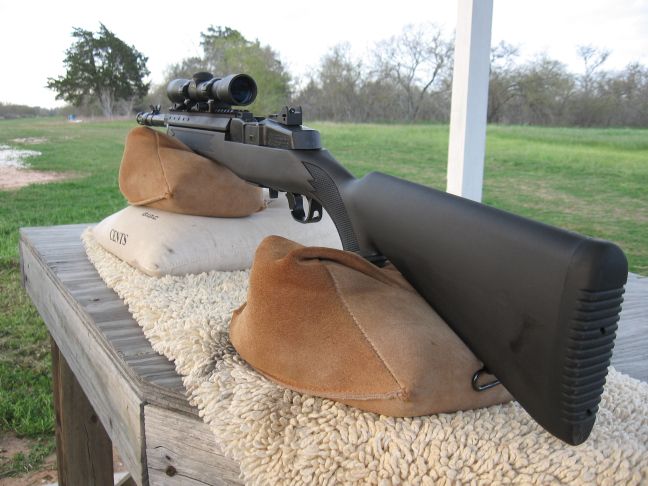
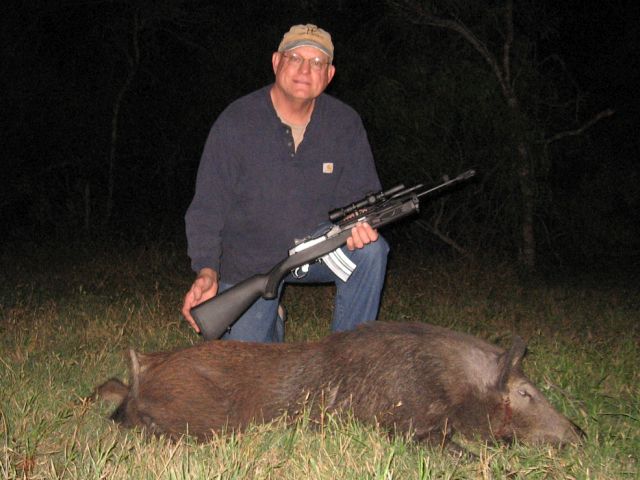
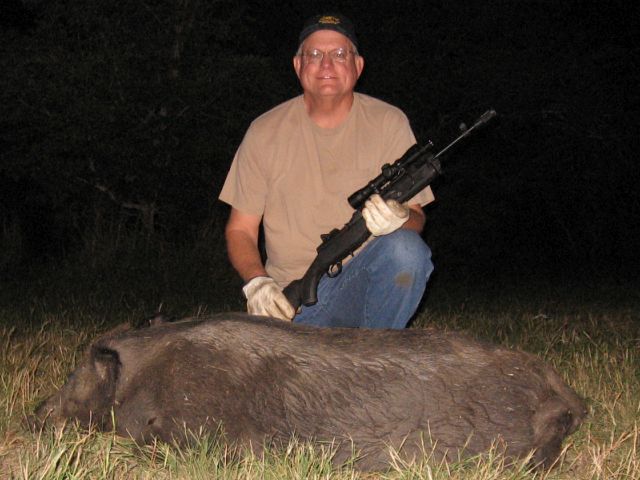
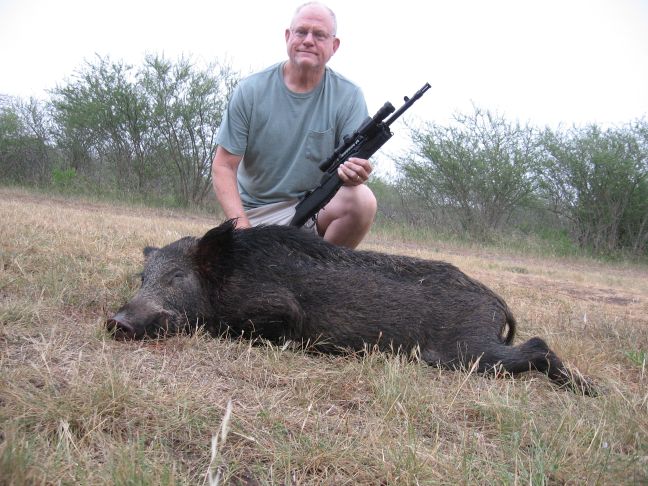
This final design is what brought me to the short necks and has taught me the most about bullet design. There is no doubt that the 7.62×39 has become my favorite cartridge. As a fellow that tromps the brush of my South Texas ranch, I know that this cartridge is capable of meeting the needs of a life time of feral hog and whitetail hunting. I have more rifles in this cartridge now than I do in any other cartridge that I shoot and as a lever nut, that is saying a lot.
Like the 300 Savage, this isn’t my first rodeo and the same lessons learned about a simple tangent ogive apply. These ogives may work for leverguns but they don’t allow a modern bolt gun be all it is capable of being.

Top band and a very short tapered bore rider (.015″) is used to match the critical components of the chamber.

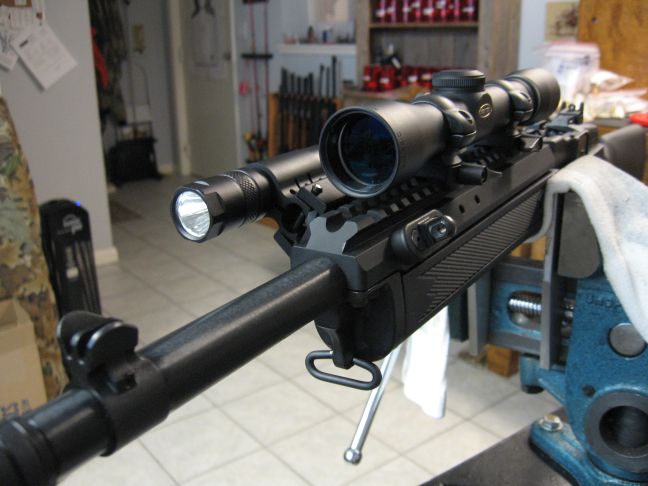
The chamber has been verified against my Savage 10 FCM, Ruger Mini-30, and Zastava M85 (my favorite light rifle). I have sidelined the 10 FCM until I have a chance to fire lap the barrel. In this Savage the freebore leade tapers to a .308″ groove and .300″ bore. I’m going to try to lap it out to .310″/.302″ or get rid of it.

The magazine feed from my bolt guns is slick as a whistle and once I dressed the forward edge of my Mini-30 magazine, the same can be said.

The 7.62×39 is a great compact cartridge especially when used in a bolt gun like the Zastava M85 Mini-Mauser. If you have ever wanted a Savage 340 or Remington 788 chambered in 30-30 Win for cast bullet hunting, you would love this combination!

This has been the longest cast bullet project I’ve attempted, several hundred hours of sweating the small details, but I believe it will pay off in the performance you see out the barrel. I have much more information available to include loading data but it has been a long day.
Swede has my shop drawings and will be doing his work to give you the options you like to see in any of my designs. We should have the group buys up tomorrow. Let’s get this going, I have a bunch of rifles that need bullets!
 mikehupp
 georgehajduk
 I’m in for the 300 Savage & 7.62×39 molds.
 SwedeNelson
 williamquiles
 daveridenour
 markpissos



 keithsharp
 Mike Bambauer

- You must be logged in to reply to this topic.